


KEY POINTS
Nvidia Omniverse, a real-time 3D graphics collaboration platform, has announced its integration with Apple Vision Pro virtual reality (VR) headsets, marking a significant step in bringing digital twins to life.
Unveiled during Nvidia GTC, a global artificial intelligence (AI) conference, this expansion combines Apple Vision Pro’s high-resolution displays with NVIDIA’s RTX cloud, as detailed in a recent blog post by Nvidia.
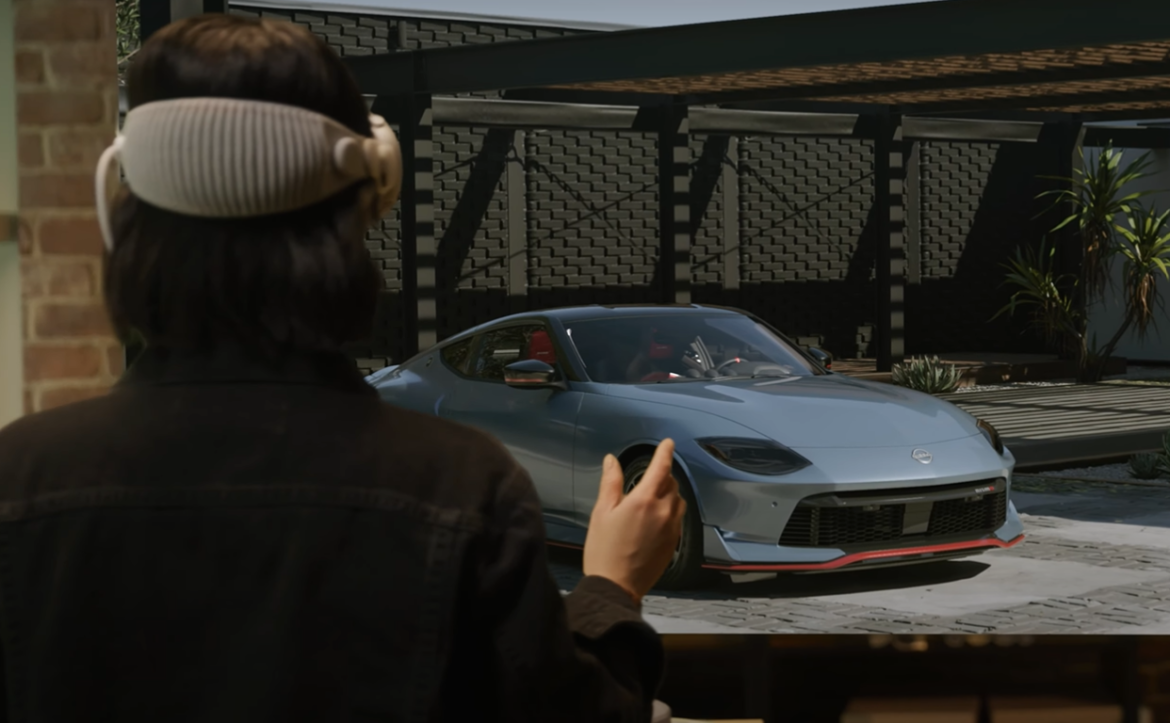
The capabilities were showcased through an interactive presentation during the conference. In the demo, a designer uses Apple’s VR headset to customize a car, selecting colors and features, and witnesses the digital materialization of the car in a physical environment. Notably, the virtual car is interactive, allowing the designer to engage with it, enter it, and explore its features.
These advancements hold promise for various industries, including customer experiences and industrial manufacturing, as highlighted in a recent report published by the World Economic Forum in collaboration with Accenture.
According to the report, 92% of US manufacturing executives are actively exploring metaverse integration, recognizing the potential benefits it can offer, such as savings on resource costs, enhanced design processes, and facilitating boundless collaborations.
Leading companies across various sectors are already embracing these technologies, leveraging mixed reality and metaverse integration to revolutionize consumer experiences. For instance, Porsche has begun experimenting with immersive car presentations, offering consumers a new way to interact with its products. Additionally, the company is exploring how engineers can leverage the metaverse to innovate in car design, allowing interior designers to create and test multiple options within virtual environments.
The World Economic Forum’s report predicts substantial growth in these sectors, estimating a $100 billion global industrial metaverse market by 2030 and a $183 billion global digital twin market by 2031.